
How to Look After Your Back and Joints on Long Journeys
Whether you're driving south for a family holiday, sitting on a train for several hours or boarding a long-haul flight, travel can involve something our bodies aren't particularly fond of: staying in the same position for a very long time.
Then add carrying suitcases, sleeping in unfamiliar positions and hauling bags through airports or stations, and it's easy to understand why an exciting trip can sometimes end in disaster or be ruined by pain in the back or neck.
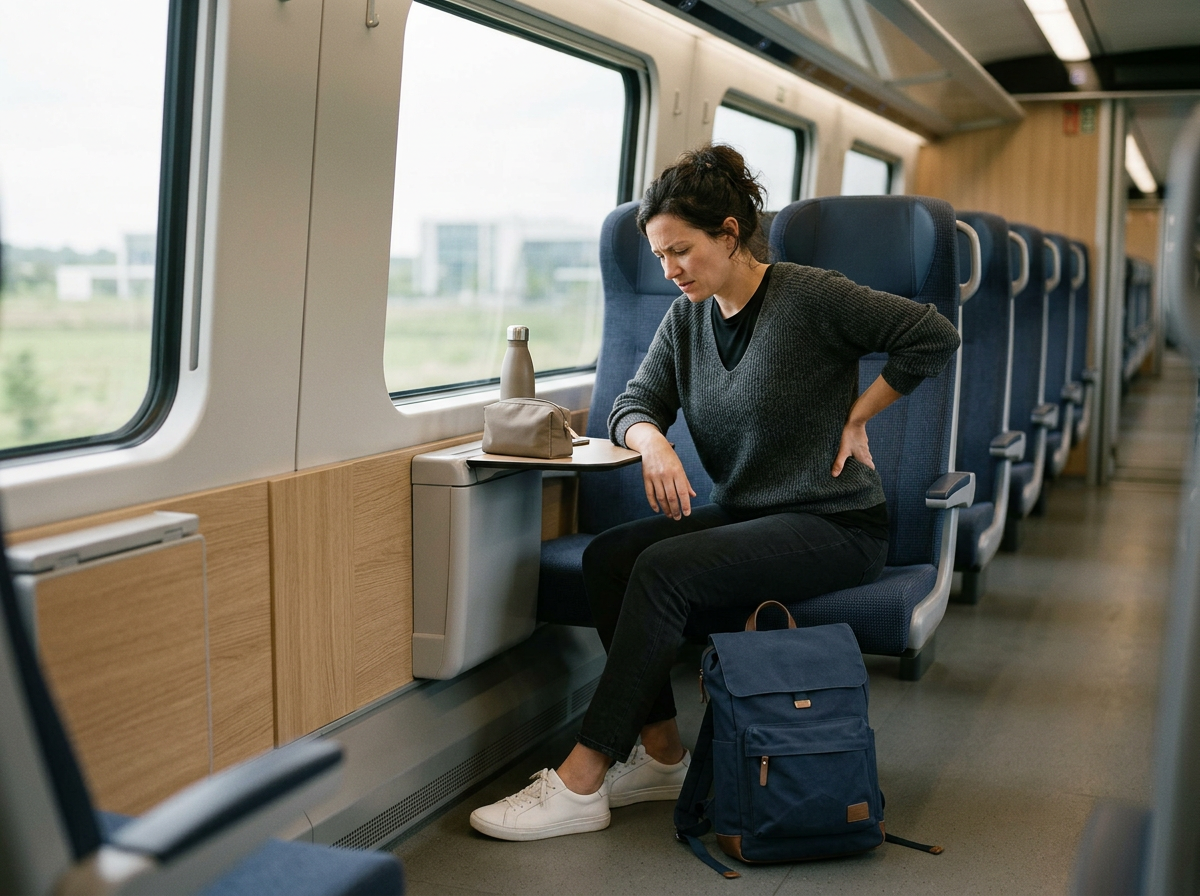
A little preparation can make a significant difference.
Here are some simple ways to look after your body while travelling.
Keep moving during long journeys
One of the simplest things you can do is move regularly.
During a long flight or train journey, try to stand, stretch or walk when it is safe and practical to do so. On longer car journeys, regular stops give both the driver and passengers an opportunity to get out and move.
As a general guide, aim to change position or move around every one to two hours rather than remaining seated continuously.
Even when you can't get up, small movements can help prevent you becoming excessively stiff.
Try:
gentle neck movements and stretches;
rolling your shoulders backwards several times;
ankle pumps by repeatedly pointing your toes up and down;
sitting upright and gently extending through your upper back.
The objective isn't to perform a workout in your aeroplane seat. It's simply to introduce movement after a prolonged period of sitting.
Set yourself up comfortably
How you sit can influence how comfortable you feel over a long journey.
Sit back into the seat so that your back is supported rather than perching forward. Where possible, keep both feet supported and allow your shoulders to relax rather than gradually rounding forwards.
Try to keep your head positioned comfortably over your shoulders rather than spending hours leaning towards a phone or tablet.
A small lumbar support or rolled item of clothing behind your lower back may feel more comfortable for some people, while a travel pillow can provide additional neck support if you're planning to sleep.
Most importantly, don't become obsessed with maintaining a supposedly perfect posture for several hours. Even a good sitting position can become uncomfortable if you never change it.
Movement and variation matter.
Be careful when lifting luggage
Luggage creates another common travel challenge.
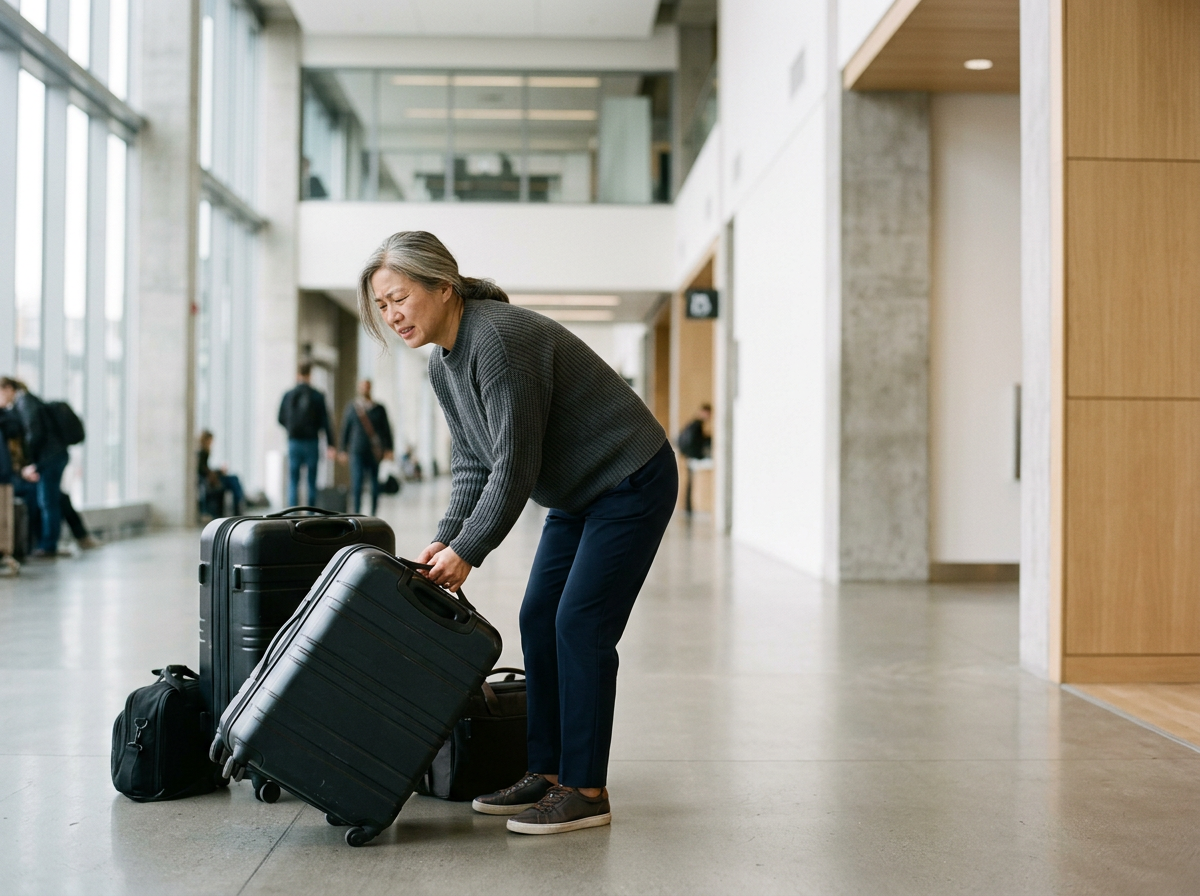
Suitcases are often heavy, awkwardly shaped and lifted in confined spaces – particularly when placing them into car boots, overhead lockers or luggage racks.
When lifting:
position yourself close to the bag;
bend through your knees rather than reaching down with relatively straight legs;
keep the load close to your body;
avoid twisting while carrying or lifting;
turn by moving your feet where possible.
If a suitcase is too heavy to control comfortably, don't turn lifting it into a test of strength. Ask for assistance.
Think about your backpack too
A backpack can be convenient for travelling, but wear both shoulder straps where possible so the load is distributed more evenly.
Pack sensibly as well. If you're carrying a backpack for several hours, ask whether everything in it genuinely needs to come with you that day.
Stay hydrated
Remember to drink water regularly throughout your journey.
Long periods of travel, warm destinations and disrupted routines can make it easy to forget normal hydration habits. Adequate hydration supports normal bodily function and can help avoid some of the fatigue associated with travel.
Be mindful that excessive alcohol and caffeine may not be helpful if they displace your normal water intake.
Don't let your phone become the journey
Phones and tablets make long journeys much easier, but several uninterrupted hours looking down at a screen can leave your neck and shoulders feeling uncomfortable.
Bring the screen towards a comfortable viewing height where practical and regularly give yourself a break.
Look up. Change position. Move your shoulders. Walk around when possible.
Again, the solution is usually not finding one position and holding it perfectly – it is avoiding spending excessive time in any single position.
Arriving at your destination
Once you arrive, some gentle movement can be a welcome change after hours of sitting.
Rather than going directly from an aircraft or car seat to several more hours lying beside the pool, consider taking a short walk and allowing your body to move normally again.
And if you've travelled across several time zones or had a particularly long journey, don't necessarily make your first activity an unusually strenuous one. Give yourself some time to recover from the journey.
What if pain is affecting your travel?
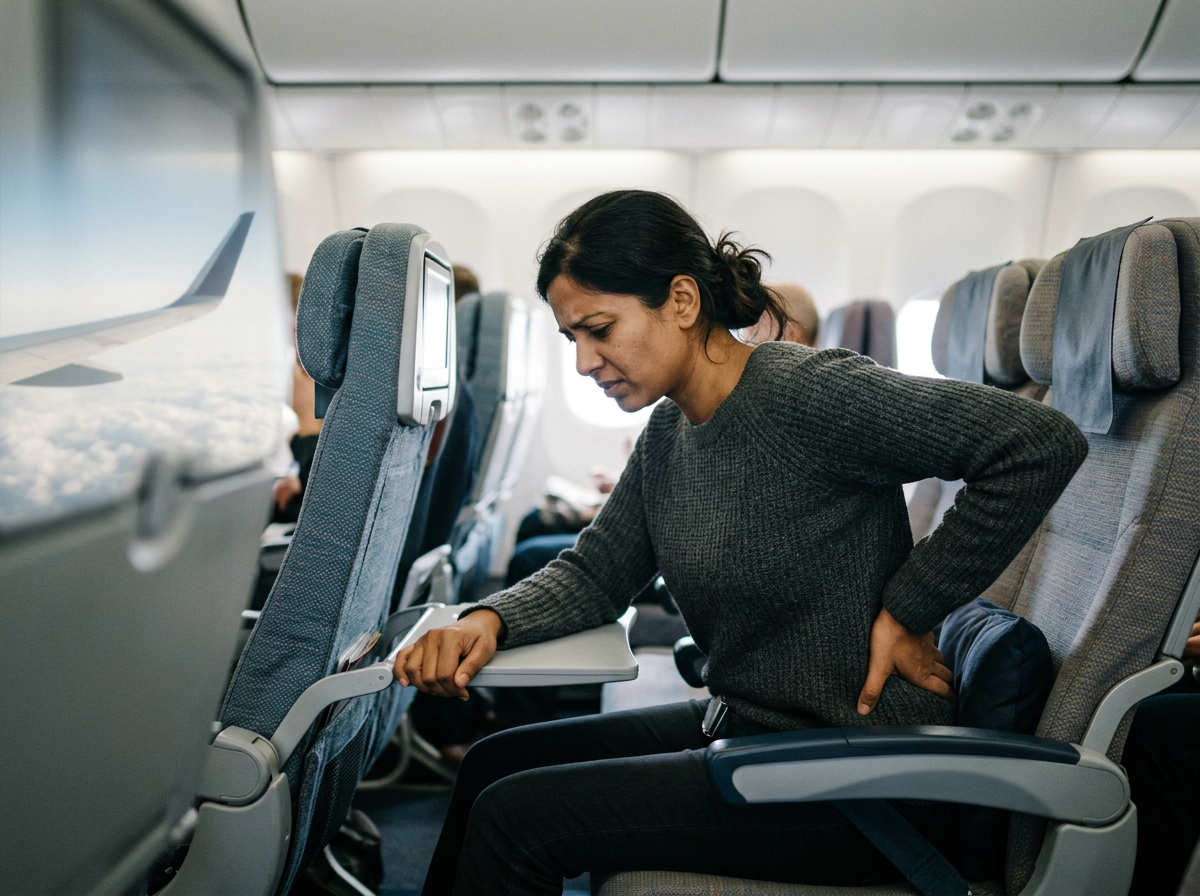
If you regularly experience back, neck or joint pain during journeys – or you're concerned that an existing musculoskeletal problem could interfere with an upcoming trip – getting it assessed before you travel may help you understand the problem and how best to manage it.
At Garioch Chiropractic (Inverurie) / Granite City Chiropractic (Aberdeen), our chiropractors assess each patient individually and can provide advice based on your condition, lifestyle and travel plans.
If persistent pain is making journeys uncomfortable, contact our clinics to arrange an appointment.
A holiday should be remembered for the destination – not the backache you picked up getting there.